| Sr. No. | Course Title | Duration | Details |
|---|---|---|---|
| 1 | Health Safety Environment & Management | 3 Years | |
| 2 | Civil & Construction Technology | 3 Years | |
| 3 | Heating Ventilation & Air Conditioning And Management | 3 Years | |
| 4 | Electronics & Communications | 3 Years | |
| 5 | TQM / QA / QC | 1 Year | |
| 6 | Mechatronics & Mechanical | 3 Years | |
| 7 | Electrical & Instruments | 3 Years | |
| 8 | Computer Applications & Hardware Networking Technologies | 3 Years | |
| 9 | Petroleum & Chemical Technology | 3 Years |

Health Safety Environment & Management
This course focuses on the principles and practices of ensuring health and safety in workplaces, environment management, and legal regulations. The course includes a blend of theory and practical elements to make students proficient in risk management, emergency response, and environmental compliance. Benefits: Graduates will be equipped with the necessary skills to work in diverse industries, ensuring workplace safety and environmental protection. Career Expectations: The course prepares you for roles such as Health & Safety Officer, Environmental Manager, and more.

Civil & Construction Technology
The Civil & Construction Technology program prepares students to design, manage, and execute construction projects. This includes an understanding of the building materials, construction methods, and infrastructure development. Benefits: Graduates will have the opportunity to work in the booming construction industry, helping to build bridges, roads, and buildings. Career Expectations: Career options include construction manager, civil engineer, site supervisor, and project coordinator.

Heating Ventilation & Air Conditioning And Management
This course provides students with the knowledge and skills required to design, install, and maintain HVAC systems in residential, commercial, and industrial buildings. Benefits: With a strong demand for HVAC specialists in various industries, graduates will find ample job opportunities. Career Expectations: Potential careers include HVAC technician, systems installer, and maintenance supervisor.

Electronics & Communications
This course equips students with the knowledge and skills to design, maintain, and troubleshoot electronic devices and communication systems. Benefits: Graduates can pursue roles in a wide range of industries, including telecommunications, consumer electronics, and digital media. Career Expectations: Career options include electronics technician, communication systems engineer, and hardware developer.

TQM / QA / QC
This course focuses on Total Quality Management (TQM) principles, Quality Assurance (QA), and Quality Control (QC) in manufacturing and service industries. Benefits: The course will equip you with the ability to perform quality audits and process optimization, critical to improving efficiency in production. Career Expectations: Graduates will be ready for roles such as Quality Assurance Manager, QC Analyst, and TQM Consultant.
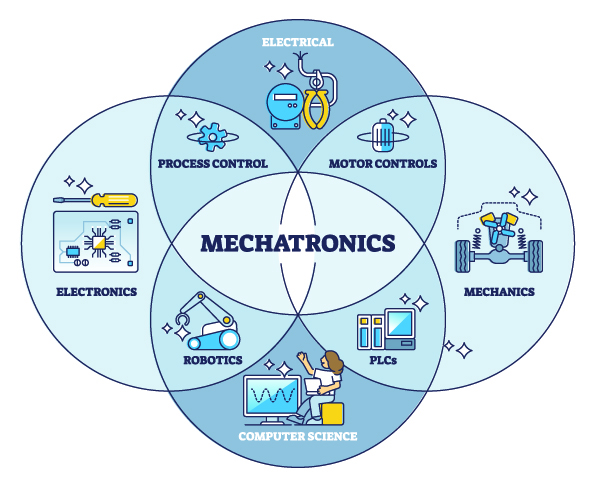
Mechatronics & Mechanical
The Mechatronics & Mechanical Engineering course blends mechanical engineering with electronics and computer science. It covers automation, robotics, and mechanical system design. Benefits: Graduates will have versatile skills for industries like robotics, manufacturing, and design. Career Expectations: Career opportunities include robotic engineer, mechanical designer, and automation specialist.
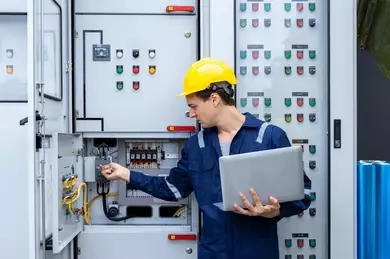
Electrical & Instruments
This course covers electrical systems and instrumentation for industrial applications, providing hands-on experience with electrical wiring, automation, and instrumentation calibration. Benefits: Graduates will be able to work in energy generation, electrical equipment maintenance, and automation fields. Career Expectations: Potential careers include electrical technician, instrumentation engineer, and control systems specialist.

Computer Applications & Hardware Networking Technologies
This course provides skills in computer hardware setup, networking, and troubleshooting. Students will learn about both software and hardware applications used in business and personal environments. Benefits: Graduates can enter the IT support and networking sectors. Career Expectations: Graduates can become network administrators, system support specialists, and IT consultants.

Petroleum & Chemical Technology
This course focuses on the principles of petroleum extraction, refining, and chemical engineering processes. It provides hands-on training in the petroleum and chemical industries. Benefits: Graduates will be qualified to enter the growing energy and chemical sectors. Career Expectations: Career paths include petroleum engineer, chemical plant operator, and environmental consultant.